
Overview
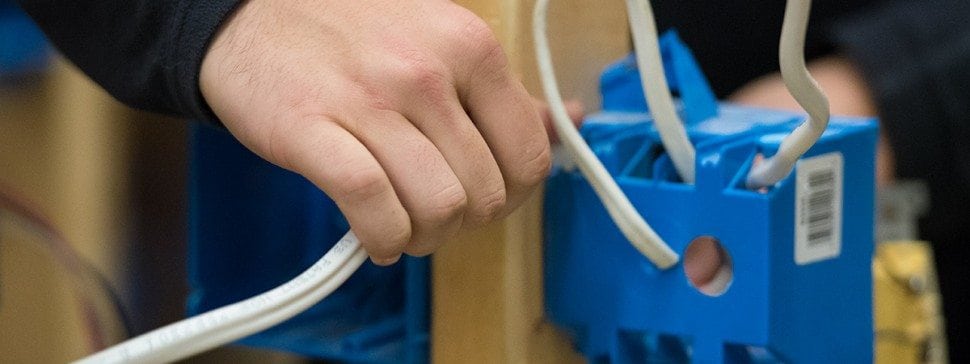
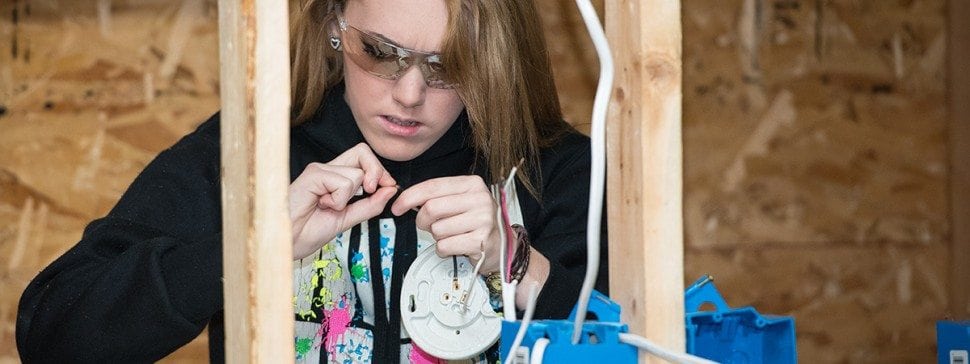
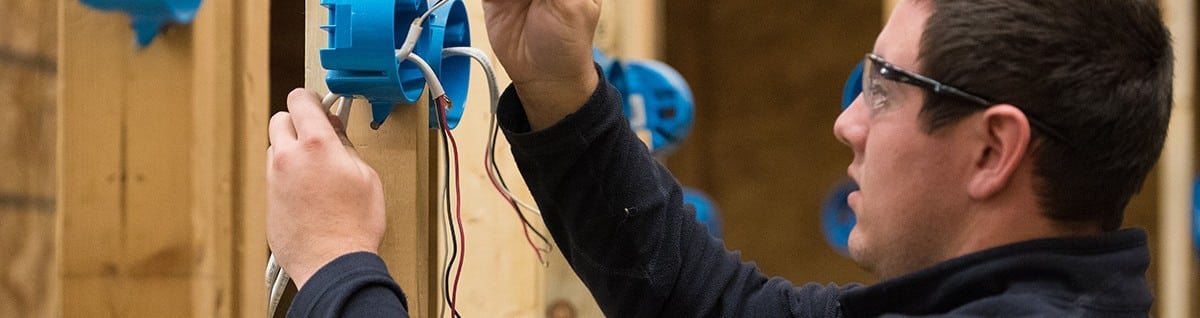
Electricity is a hands-on program. You will use math skills to solve problems and complete tasks. If you are interested in a bright future and providing a service that makes the world run, then you should consider this program.
You Will Learn:
- Residential wiring
- Theory and how to apply it to projects
- How to read technical drawings
- How to use mathematical principles to solve electrical problems
- How to work in a team setting alongside Construction Technology students
A Typical Student
The typical student is one that enjoys hands-on learning and has the applied math skills to be successful. There will be a significant emphasis on mathematical principles to solve electrical problems. These skills will be required through the second year of the program, during further training, and on the job. Successful students have the patience and attention to detail to solve problems using the skills they have learned. They can work on projects independently or with other students. They can read drawings, check their work as needed, and stay on task without constant supervision. Safety is a primary focus, and students must follow OSHA guidelines to keep themselves and others safe.
Get Yourself Ready
To be prepared, focus on doing well in math classes, being on track for graduation, and developing a good work ethic. The following pathway courses will help you prepare for the Electricity program, further education and training, and a career in the electrical industry:
- Preparing for College & Careers
- Introduction to Construction
Curriculum
Currently under revision (Aug 2023)