
Overview
If you like to work with your hands and are interested in an exciting career that can provide you numerous opportunities, then you should consider this program. Participate in the Early College option and earn the Ivy Tech Certificate in Structural Welding while at WCC.

Early College Option
Welding Technology is an Early College program. Earn the Ivy Tech Certificate in Structural Welding by completing all dual credits offered over two years. Students who complete the Certificate are eligible to participate in Ivy Tech Richmond’s graduation ceremony. Take additional dual credit classes at your high school to work toward the next steps of a Technical Certificate in Welding Technology and/or Associate of Applied Science in Industrial Technology. These classes include:
- Dual Credit Speech
- Dual Credit Math
- Dual Credit English
- Dual Credit Physical Science
You Will Learn:
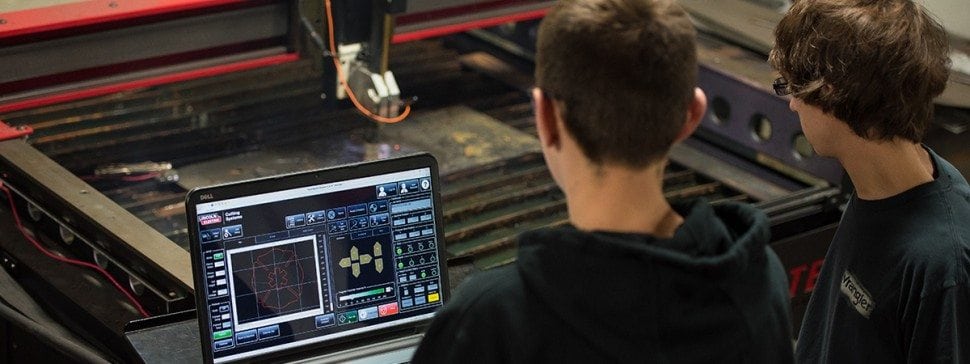
- 4 major welding processes along with oxy-fuel & plasma cutting
- How to weld in flat, vertical, horizontal, & overhead positions
- How to read welding symbols & understand blueprints
A Typical Student
The typical student is a solid academic student on track with credits for graduation. Students who enroll in Welding Technology like hands-on work and plan to pursue a career in a technical field. Successful students have the patience and attention to detail to solve problems using the skills they have learned. They can work on projects independently or with other students. They take initiative, check their work as needed, and stay on task without constant supervision. Safety is a primary focus, and students must follow the guidelines to keep themselves and others safe.
Get Yourself Ready
To be prepared for success, do well in all high school courses, be on track for graduation, and develop a good work ethic. The following pathway courses will help prepare you for the Welding Technology career program, further education and training, and a career in the welding industry:
- Preparing for College & Careers
- Introduction to Manufacturing
- Introduction to Advanced Manufacturing & Logistics
- Introduction to Engineering Design